Mastering Generative Engine Optimization for 2025
Mastering Generative Engine Optimization for 2026
The transition from traditional search to generative search is more than just a cosmetic change to the Google home page. We are moving from a “link-retrieval” model to an “answer-synthesis” model. In the old days, a search engine was like a librarian pointing you to a shelf; today, AI is like a researcher who reads all the books and summarizes the answer for you.
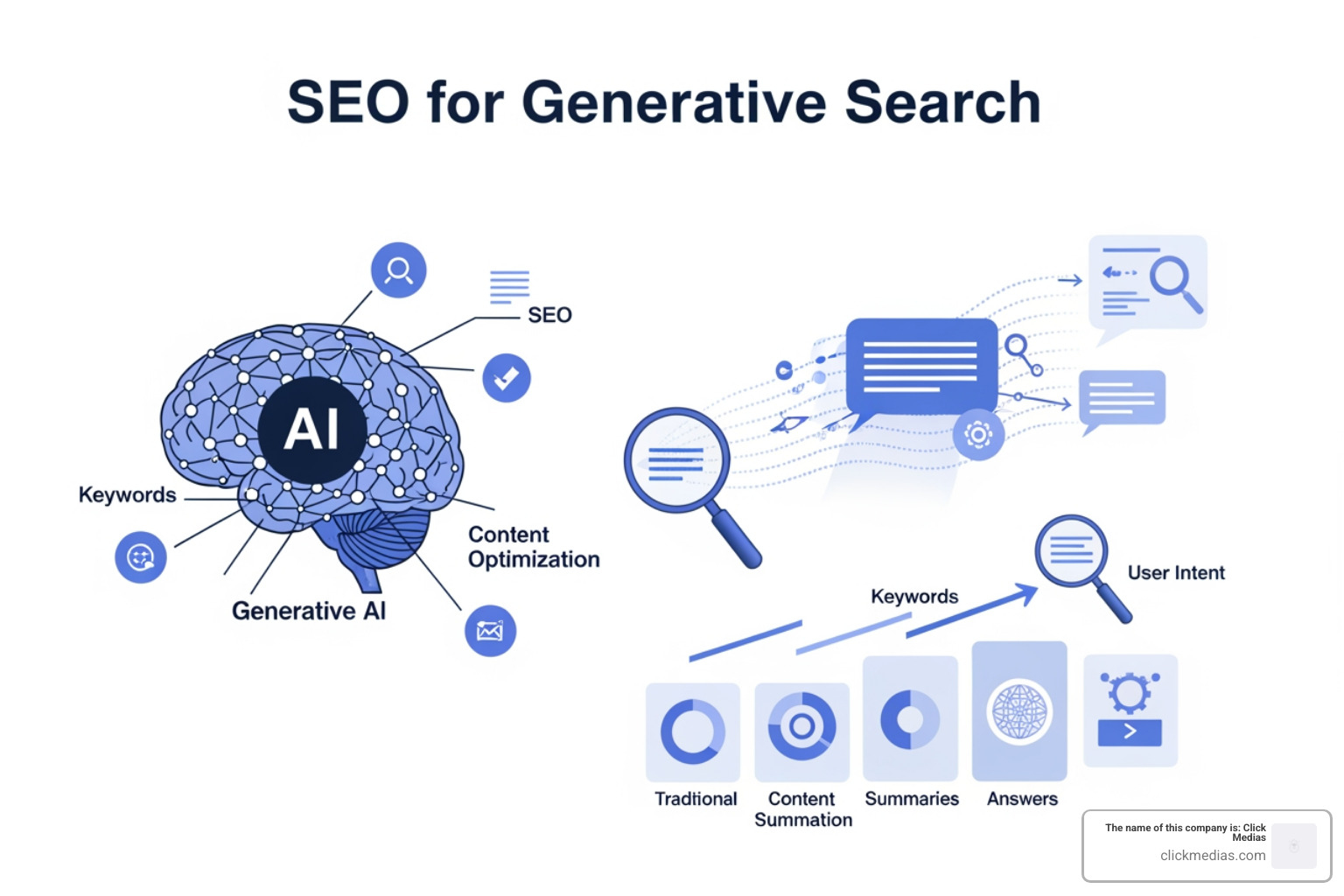
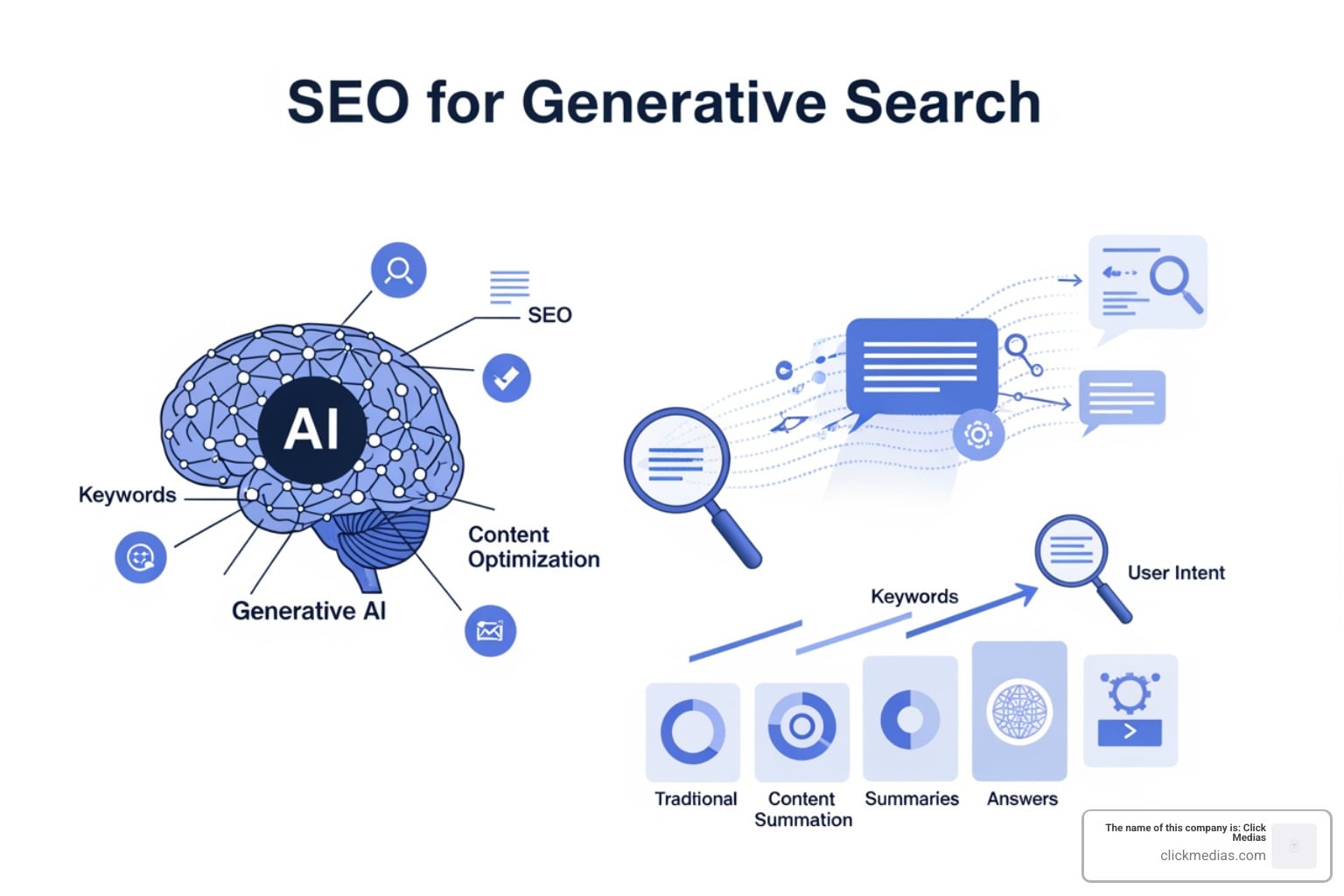
At the heart of this shift is Generative Engine Optimization (GEO). While SEO was built on the back of PageRank and keyword density, GEO is built on Retrieval-Augmented Generation (RAG). When you ask an AI a question, it doesn’t just “know” the answer. It searches a vector database—a high-dimensional map of information—finds the most relevant “chunks” of content, and uses an LLM to stitch them together into a response.
If your content isn’t “retrievable” or “chunkable,” the AI will simply skip you. This explains why the correlation between top Google links and AI-cited sources has plummeted to less than 20%. Being #1 on the SERP no longer guarantees you’ll be the source the AI trusts.
SEO vs. GEO: A Comparison Table
| Feature | Traditional SEO | Generative Engine Optimization (GEO) |
|---|---|---|
| Primary Goal | Rank #1 for specific keywords | Be cited/mentioned in AI responses |
| User Intent | Navigation, Informational, Transactional | Problem-solving, Comparison, Synthesis |
| Content Format | Long-form blogs, landing pages | Structured data, extractable “answer” blocks |
| Success Metric | Click-Through Rate (CTR) | Citation Share / Share of Voice |
| Primary Platform | Google, Bing | ChatGPT, Gemini, Perplexity, Claude |
| Query Length | Short (Avg. 4 words) | Long/Conversational (Avg. 23 words) |
Why SEO for generative search is the new standard
Why are we talking about this now? Because the numbers are too big to ignore. Generative queries are fundamentally different—they are conversational and specific. When a user types a 23-word query into Perplexity, they aren’t looking for a list of links; they want a definitive recommendation.
The zero-click reality is here. With 60% of searches ending without a user ever leaving the search engine, your brand’s only chance of survival is being the name the AI actually says. However, the potential is massive: retailers could see a 520% increase in traffic from AI search engines compared to 2025. If you aren’t optimizing for seo for generative search, you are essentially invisible to the 800 million weekly users on ChatGPT and the 750 million monthly users on Gemini.
How GEO differs from traditional SEO
In traditional SEO, we obsessed over backlinks. In GEO, we obsess over reference rates and model relevance. It’s no longer enough to have a high Domain Authority; you must have “Entity Clarity.” This means the AI needs to understand exactly who you are, what you sell, and why you are an expert, without any ambiguity.
Because AI models prioritize information retrieval over link popularity, a smaller, niche site with highly structured, factual data can actually outrank a massive corporation that relies on legacy SEO.
The Core Pillars of an Effective GEO Strategy
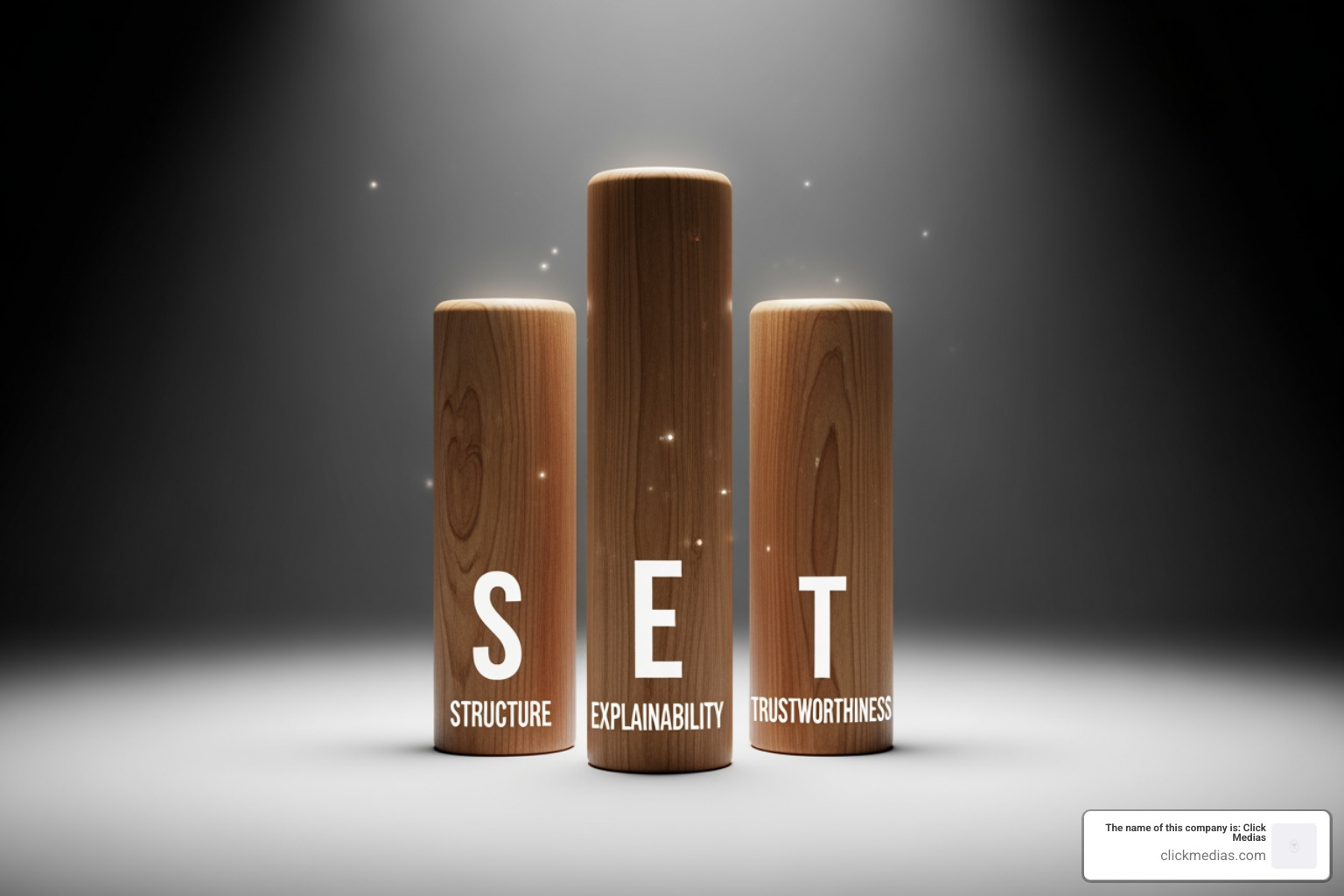
To win in the age of AI, we use the S-E-T framework: Structure, Explainability, and Trustworthiness. This isn’t just a theory; it’s backed by scientific research on GEO strategies from institutions like Princeton University. Their study of over 10,000 queries found that specific content tweaks can boost your visibility in AI responses by up to 40%.
Technical foundations of SEO for generative search
The first step is making sure the AI can actually read your site. This goes beyond standard indexing.
- JSON-LD & Schema Markup: This is the “language” of AI. By using Schema.org markup, we provide a machine-readable map of your content. Whether it’s an
FAQPage,Product, orLocalBusinessschema, these tags help the AI understand the relationship between entities. - Robots.txt & AI Crawlers: You must ensure your site allows access to bots like
GPTBot(OpenAI) andClaudeBot(Anthropic). If you block these, you’re essentially opting out of being cited by the world’s most popular AI tools. - Machine-Readable Data: AI prefers tables, bulleted lists, and clear hierarchies. If your data is trapped inside a complex image or a messy layout, the AI won’t be able to “chunk” it for its response.
Building authority and earned mentions
AI models don’t just look at your website; they look at the entire internet to see what people are saying about you.
- Digital PR & Unlinked Mentions: AI models are smart enough to recognize your brand name even if there isn’t a clickable link. Getting mentioned in a reputable news article or a popular podcast transcript builds your “Entity Authority.”
- The Knowledge Graph: Your presence on Wikipedia, LinkedIn, and industry directories helps “anchor” your business in the global Knowledge Graph, making it easier for AI to identify you as a trusted source.
- Reddit & Community Footprint: Research shows that Reddit and YouTube are among the top-cited sources for LLMs. Participating in these communities ensures that when an AI looks for “real-world” advice, it finds your brand.
Content Optimization for AI-Generated Responses
Writing for AI is different than writing for humans. While humans appreciate a bit of fluff and storytelling, AI models are looking for “factual density.”
According to the Princeton study, the most effective ways to get cited are:
- Authoritative Writing: Use assertive, expert language. Avoid “hedging” words like “perhaps” or “it might be.”
- Adding Statistics: Quantitative data is highly attractive to AI. A simple stat like “70% of users report…” can increase your visibility by 30-40%.
- Citing Sources: Ironically, citing other experts makes the AI more likely to cite you. It proves your content is grounded in fact.
- Unique Phrasing: Using technical terms and unique (but relevant) vocabulary helps the AI distinguish your content from the “sea of sameness” produced by other unedited AI tools.
Platform-specific preferences for ChatGPT, Claude, and Perplexity
Each AI has its own “personality” and preference for how it consumes seo for generative search content:
- ChatGPT: Loves conversational tones, step-by-step guides, and comprehensive FAQ sections. It prioritizes content that anticipates the user’s next question.
- Claude: Prefers analytical depth, technical accuracy, and balanced viewpoints. If you’re writing about a complex topic, Claude wants to see evidence-based claims.
- Perplexity: As an “answer engine,” it craves recency and factual density. It loves statistics, data points, and clear citation formatting.
Structuring content for SEO for generative search
To make your content “AI-ready,” we recommend the “Answer-First” approach.
- The 40-80 Word Summary: Start your articles or sections with a concise summary that answers the primary query. This is the perfect length for an AI to “scrape” and use as a snippet in an AI Overviews.
- Self-Contained Paragraphs: Each paragraph should make sense on its own. Since RAG systems pull “chunks” of text, your content shouldn’t rely on context from three pages ago.
- Semantic Headers: Use H2 and H3 tags that are phrased as questions or clear statements (e.g., “How to measure GEO success” instead of “Metrics”).
Measuring Success in the Age of AI Search
You can’t manage what you don’t measure. But how do you track success when there are no clicks? We’ve moved toward “Invisible Metrics.”
- Citation Frequency: How often is your brand cited as a source in Perplexity or Gemini for your target keywords?
- Share of Voice (SoV): In a category like “Best CRM,” what percentage of the AI’s response is dedicated to your brand versus your competitors?
- Sentiment Analysis: Is the AI describing your brand in a positive, neutral, or negative light?
- Assisted Conversions: Tracking users who visit your site after interacting with an AI (often visible in referral traffic from
chatgpt.comorperplexity.ai).
Common mistakes to avoid in GEO
Don’t let the “newness” of GEO lead you into old traps.
- Keyword Stuffing: This is the fastest way to get ignored. AI understands context and synonyms; repeating the same word 50 times just makes your content look like spam to a sophisticated LLM.
- Unedited AI Content: If you use AI to write your GEO content without human review, you’ll end up with “circular hallucinations.” AI models are beginning to filter out low-quality, AI-generated “slop.”
- Duplicate Answers: Don’t repeat the same answer across five different pages. This confuses the AI’s entity mapping.
- Image-Only Data: AI is getting better at “seeing,” but text is still king. If your best data is trapped in an infographic without a text description, the AI can’t cite it.
Frequently Asked Questions about Generative Search
Is GEO just rebranded SEO?
Not quite. While they share the foundation of quality content and technical health, the goals are different. SEO is about winning the “click” from a list of links. GEO is about winning the “mention” within an AI-generated answer. The tactics—like prioritizing statistics and authoritative tone over keyword density—are distinct.
How do I track my visibility in AI Overviews?
Standard tools like Search Console don’t show this yet. You need to use specialized AI visibility toolkits or manual audits. We track how often your brand appears in the “Sources” section of Google AI Overviews and the sentiment of those mentions.
Does AI search favor large brands over small businesses?
Large brands have a natural head start due to existing authority, but GEO actually levels the playing field. Because AI prioritizes accuracy and structure, a small business that provides the most clear, factual, and well-structured answer to a specific query can easily be cited over a “lazy” big brand.
Conclusion
The era of traditional search dominance is fading, but the era of AI discovery is just beginning. By mastering seo for generative search, you aren’t just chasing a new trend—you are future-proofing your business for a world where AI is the “front door” to the internet.
At Click Medias, we specialize in bridging the gap between traditional SEO and the new world of AI Search Optimization (AISO). We don’t just help you rank; we help you become the authority that AI models trust and recommend. Whether it’s through technical schema audits, authoritative content creation, or building your brand’s footprint on high-authority platforms like Reddit and YouTube, we ensure your business remains visible wherever your customers are searching.
Ready to see how your brand performs in the age of AI? Click Medias is available to help you start your journey toward GEO mastery today.
