Cracking the code for ai search engine ranking
Why AI Search Engine Ranking Matters Now
AI search engine ranking determines whether your business appears in answers from ChatGPT, Perplexity, Google AI Overviews, and other generative AI tools—or gets left out entirely. Here’s what you need to know:
Quick Answer: How to Improve AI Search Rankings
| Priority | Action | Impact |
|---|---|---|
| 1. Content-Answer Fit | Write direct, structured answers to specific questions | High citation likelihood |
| 2. Authority Signals | Build mentions, reviews, and backlinks from credible sources | Increased trust scoring |
| 3. Technical Setup | Add schema markup, allow AI crawlers, ensure mobile speed | Better findability |
| 4. Track Visibility | Monitor citations in ChatGPT, Perplexity, AI Overviews | Measure what’s working |
Search is no longer about keywords and blue links.
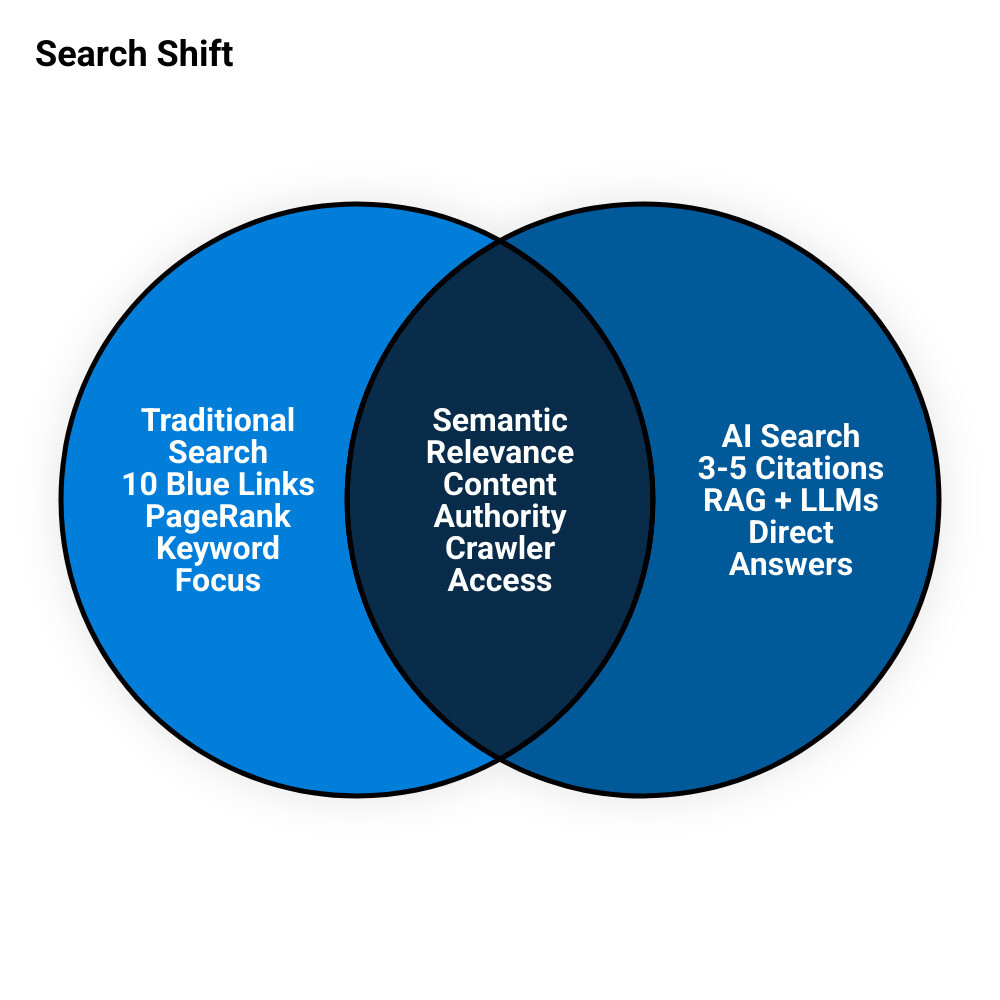
By 2025, AI-powered search has fundamentally changed how customers find businesses. Instead of scrolling through 10 search results, users ask questions and get one synthesized answer—often pulling from just 3-5 sources.
If your business isn’t among those sources, you’re invisible.
The numbers tell the story: AI Overviews now appear on roughly 16.5% of queries. A quarter of all searches are already zero-click, meaning users never visit a website. Meanwhile, tools like Perplexity and ChatGPT are processing millions of queries daily, citing some brands consistently while ignoring others completely.
This isn’t traditional SEO anymore. It’s Generative Engine Optimization (GEO)—a new discipline focused on earning citations in AI-generated answers rather than climbing the rankings ladder.
The good news? Early movers report dramatic results. Companies optimizing for AI visibility see average traffic increases of 40% and visibility improvements of 4x when they understand the mechanics.
This guide breaks down exactly how AI search engines decide what to cite, what signals matter most, and which tactical changes deliver real results.
The Mechanics of AI Search Engine Ranking
To win at ai search engine ranking, we first have to understand that AI engines don’t “rank” websites in the way Google used to. They “select” them. Traditional search engines use crawlers to build an index and then use algorithms like PageRank to sort links by relevance and authority. AI search engines, however, use a more complex pipeline.
How the Pipeline Works: RAG and LLMs
Most modern AI search tools, such as Perplexity, use a process called Retrieval-Augmented Generation (RAG). When you type a query, the system doesn’t just guess an answer based on its training data. Instead, it performs a “Query Fan Out”—breaking your prompt into 3-4 sub-queries that it runs through traditional search indexes (like Bing or Google).
The engine then retrieves relevant passages from the top results, feeds them into a Large Language Model (LLM) like GPT-4o or Claude, and asks the model to synthesize a coherent answer. The “ranking” happens during this synthesis: the AI decides which passages are most factual, relevant, and helpful to the user’s specific intent.
Semantic Search and Vector Embeddings
AI search relies heavily on semantic search. Unlike keyword matching, semantic search uses Natural Language Processing (NLP) and vector embeddings to understand the meaning behind words. If you search for “how to fix a leaky pipe,” the AI understands the relationship between “wrench,” “sealant,” and “water pressure,” even if those exact keywords aren’t in your query. It looks for content that fits the mathematical “neighborhood” of the answer.
| Feature | Traditional SEO | Generative Engine Optimization (GEO) |
|---|---|---|
| Primary Goal | Rank #1 for a specific keyword | Earn a citation in the AI-generated summary |
| Ranking Factor | Backlinks, Keyword Density, Domain Authority | Content-Answer Fit, Factual Density, Entity Signals |
| User Experience | Click-through rate to website | Information findability within the answer |
| Data Retrieval | Indexing full pages | Extracting specific passages and data points |
| Output | List of links (SERP) | Synthesized, conversational response |
Real-Time Retrieval and Source Attribution
One of the biggest shifts in 2025 is real-time retrieval. While early versions of ChatGPT had “knowledge cutoffs,” today’s AI search engines browse the live web. They prioritize source attribution, meaning they provide links to verify their claims. Your goal is to ensure your content is the most “liftable” source for the AI to grab and attribute.
Core Pillars of Generative Engine Optimization (GEO)
If we want to dominate ai search engine ranking, we need to focus on the signals that LLMs value. Research into over 400,000 pages cited by AI shows that specific characteristics make a page more likely to be selected.
Content-Answer Fit and Factual Density
The AI is looking for the most direct answer to the user’s prompt. This is called “content-answer fit.” If a user asks a technical question, the AI will bypass fluff-filled marketing intros and head straight for the data. High factual density—using statistics, specific names, and clear definitions—increases your citation likelihood.
Entity Signals and Topical Authority
AI models think in terms of “entities”—people, places, things, and concepts. To rank, your site must establish itself as an authority on a specific entity. For example, if you are a medical site, appearing in Consensus, which searches over 200 million academic papers, provides a massive authority signal. The AI sees that you are cited by scientific peers and is more likely to trust your content for general queries.
E-E-A-T: Experience, Expertise, Authoritativeness, and Trustworthiness
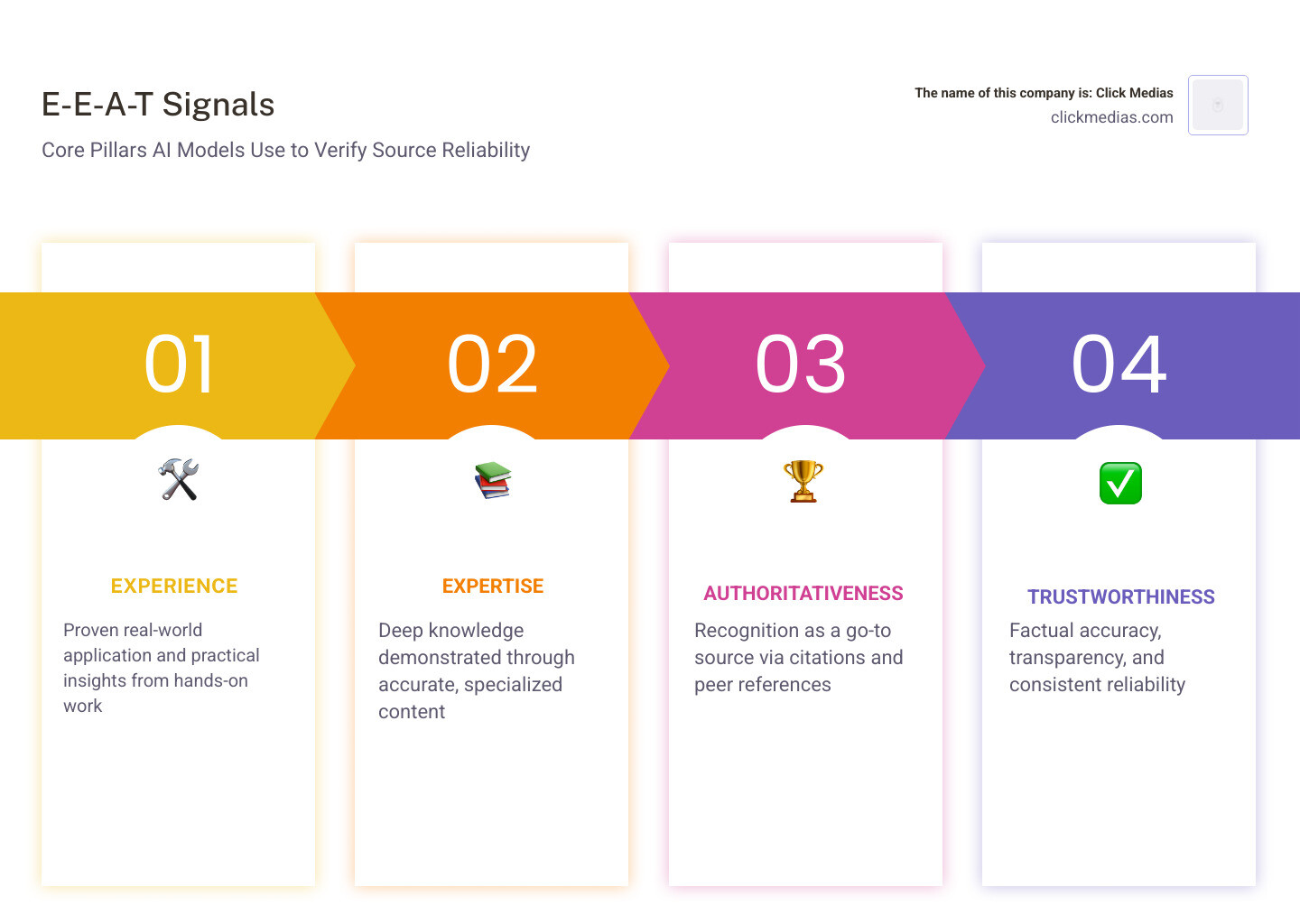
The traditional SEO pillars of E-E-A-T are more important than ever. AI engines are trained to avoid “hallucinations” (making things up), so they gravitate toward sources with high credibility.
- Freshness: AI search engines love current data. Regularly updating your high-impact pages with the latest stats can give you an edge over older, static content.
- Brand Reputation: Mentions in industry publications, positive sentiment in reviews (like on Reddit or G2), and a strong social footprint all act as “trust signals” that the AI picks up on.
Advanced Tactics for Modern Visibility
To move beyond the basics, we need to make our content “machine-liftable.” This means formatting information so an AI can easily extract it without needing to parse complex creative metaphors.
Content Strategies for ai search engine ranking
- Direct Answers First: Use the “Inverted Pyramid” style. Put the most important answer in the first paragraph.
- Bulleted Lists and Tables: These are gold for AI. If an AI is looking to compare three products, it will scan for a comparison table. If it finds yours, you’re likely to be the cited source for that entire section of the answer.
- Question-Based Headers: Use H2s and H3s that mirror the questions people actually ask (e.g., “What are the best tools for…”).
- Human-Like Writing with Value-Add: While the AI wants data, it also wants “unique insights.” Adding proprietary data, case studies, or expert opinions makes your content something the AI can’t just synthesize from a dictionary.
Technical Requirements for ai search engine ranking
Technical SEO hasn’t gone away; it has just evolved. If the AI bot can’t crawl you, you don’t exist.
- Schema Markup: Use JSON-LD schema to define your entities. FAQ schema, Product schema, and Organization schema help the AI understand exactly what your data represents.
- Robots.txt and Crawler Access: Ensure you aren’t accidentally blocking bots like OAI-SearchBot (OpenAI’s search crawler). While some sites block AI training bots, blocking search bots will kill your ai search engine ranking.
- Server-Side Rendering (SSR): Many AI crawlers struggle with heavy JavaScript. Ensure your most important content is rendered on the server so it’s visible in the raw HTML.
- IndexNow: Use IndexNow to instantly notify engines like Bing (which powers ChatGPT Search) when you publish new content.
- Academic and Trusted Databases: For technical or medical niches, ensure your researchers are cited in databases like PubMed or JSTOR. These act as the ultimate “truth” sources for many AI models.
Monitoring and Measuring AI Visibility
How do we know if our efforts are working? Unlike traditional SEO, where we just check a rank tracker for “Position 1,” AI visibility is about “Share of Voice.”
Tracking Citations and Sentiment
We need to monitor how often our brand is mentioned in AI answers. Tools like SE Ranking or specialized GEO trackers now offer “AI Overview” monitoring. You want to track:
- Citation Rate: What percentage of target queries cite your website?
- Sentiment: When the AI mentions you, is the context positive? (e.g., “Grammarly is a top-rated tool” vs. “Some users find Grammarly intrusive”).
- Organic-AI Overlap: Are the pages ranking in Google’s top 10 also the ones being cited in AI Overviews? (Industry average shows about 5 URLs from the top 20 usually make the cut).
Manual Prompt Testing
Don’t underestimate the power of manual checks. We recommend running a “Brand Audit” on ChatGPT and Perplexity once a month. Ask questions like “What are the best digital marketing services in London?” and see who the AI recommends. If you’re not there, look at who is being cited and analyze their content structure.
Measuring ROI
Since AI search often leads to zero-click results, we have to look beyond “sessions.” Look for “branded search lift” (people searching for your brand specifically after seeing it in an AI answer) and referral traffic from AI platforms in your GA4 reports.
Frequently Asked Questions
What is the difference between SEO and GEO?
Traditional SEO focuses on optimizing for search engine algorithms to rank links in a list. Generative Engine Optimization (GEO) focuses on optimizing content so that Large Language Models (LLMs) select and synthesize your information into a direct answer. SEO is about “being found,” while GEO is about “being cited.”
How do AI search engines choose which sources to cite?
They prioritize three things: Relevance (how well the content answers the prompt), Authority (the credibility of the domain and author), and Extractability (how easy it is for the AI to pull the data). They often start with the top results from engines like Bing or Google and then re-rank them based on how well the text fits the required answer.
Can I optimize my website for ChatGPT and Perplexity specifically?
Yes, though the strategies overlap. For ChatGPT, focus on Bing indexing and high-quality backlinks, as it relies heavily on Bing’s search API. For Perplexity, focus on factual density and being cited in authoritative databases, as it excels at multi-source synthesis. However, a broad “AISO” (AI Search Optimization) strategy usually works across all platforms.
Conclusion
The era of “10 blue links” is fading. To stay competitive, businesses must adapt to the new reality of ai search engine ranking. This doesn’t mean abandoning traditional SEO—it means evolving it. By focusing on factual density, structured data, and authoritative signals, we can ensure our brands aren’t just indexed, but are actually part of the conversation.
At Click Medias, we specialize in this transition. Our AI Search Optimization (AISO) services are designed to help you dominate both traditional search and the new world of generative answers. We don’t just look at keywords; we look at how AI models perceive your brand’s authority and helpfulness.
The future of search is conversational, and the brands that speak the language of AI today will be the ones that customers find tomorrow.
